

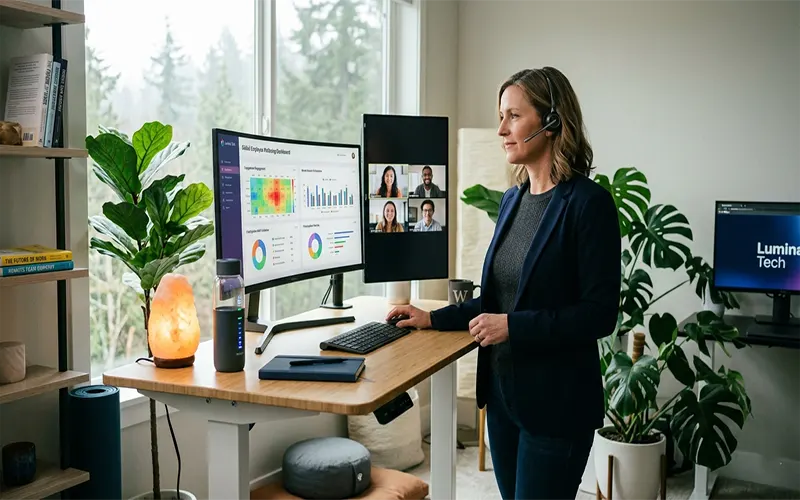
In 2026, the tech industry has moved beyond the “Great Reshuffle” into an era of human sustainability. For remote-first companies, the traditional perks of catered lunches and ergonomic office chairs have been replaced by a more complex challenge: maintaining the psychological and physical vitality of a globally distributed workforce.
This shift has elevated the Senior Corporate Wellness Program Manager from a mid-level HR role to a high-stakes strategic architect. In this landscape, wellness is no longer a “nice-to-have” benefit; it is the fundamental infrastructure that prevents talent attrition and drives enterprise-level performance.
The Evolution of the Role: From Perks to Infrastructure
The 2026 wellness leader does not just manage a budget for meditation apps; they design the systemic interventions that allow a remote workforce to thrive. Their core responsibility is to transition the company from “bolt-on” wellness—adding programs to a toxic or poorly designed workflow—to “built-in” wellness.
Primary Responsibilities Include:
- Systemic Work Design: Collaborating with operations to implement asynchronous communication standards and “Deep Work” blocks to combat the ubiquitous $10 trillion global productivity drain caused by disengagement.
- Data Analytics & Wearable Integration: Leveraging anonymized data from population health platforms and wearables to identify early markers of burnout, such as “anxiety of obsolescence” in teams facing rapid AI integration.
- Vendor Ecosystem Management: Overseeing a suite of hyper-specialized vendors ranging from menopause support (e.g., hormone coaching) to financial resilience specialists and neurodiversity advocates.
- Human-Led AI Orchestration: Balancing the use of AI-driven mental health bots with high-touch human interventions, ensuring that digital tools support rather than replace human connection.
The Remote Tech Nuance: 2026 Challenges
Managing wellness in a remote tech environment requires a unique brand of “digital empathy.” The Senior Manager must solve for challenges that did not exist five years ago:
- Digital Isolation & “Third Space” Loss: Without a commute, the boundary between work and home has dissolved. Wellness managers are now engineering “digital transitions”—mandated shutdown rituals and virtual “non-work” spaces that mimic the spontaneous social interactions of a physical office.
- Cross-Border Compliance & Health Equity: A remote tech company in 2026 often employs talent across 50+ countries. The Senior Wellness Manager must ensure that a mental health initiative is as effective and legally compliant in Bangalore as it is in Berlin, navigating complex regulations like GDPR and local health privacy laws.
- The “Anxiety of Obsolescence”: In an AI-integrated marketplace, the biggest stressor for tech workers is the fear of skill decay. Modern wellness programs now include continuous upskilling as a primary mental health intervention, building a “Competence-Confidence Loop” that buffers against job-related anxiety.
Key Skills & Qualifications for the 2026 Market
To secure a senior role in a top-tier remote tech firm (where salaries now range from $115,000 to $185,000+), candidates must move beyond basic HR certifications.
- Advanced Educational Foundation: While a Bachelor’s in Health Promotion or Exercise Science is a start, 2026 leaders often hold a Master of Public Health (MPH) or an MBA with a focus on Human Capital.
- Specialized Credentials: Certification as a Certified Wellness Practitioner (CWP) or Certified Health Education Specialist (CHES) is standard. Additional expertise in Behavioral Economics or Data Science is highly prized.
- Business Acumen: The ability to speak the language of the C-suite is non-negotiable. Senior managers must prove VOI (Value on Investment) by linking wellness metrics—such as reduced absenteeism (down 30% in high-performing firms) and increased employee life evaluation—directly to the bottom line.
Future Trends: What’s Next for 2026?
As we look toward the latter half of the decade, three trends are defining the cutting edge of corporate wellness:
- Metabolic & Lifestyle Medicine: Companies are moving into “preventive nutrition,” offering 1:1 access to registered dietitians and metabolic health tracking to improve daily cognitive performance.
- Neurodiversity Support: Tailoring work environments for ADHD, autistic, and dyslexic employees is no longer a niche accommodation but a mainstream productivity strategy.
- Financial Resilience Coaching: With global economic shifts, “financial wellness” has moved from simple 401(k) matching to proactive coaching on wealth building and inflation-adjusted living.
A Day in the Life: The Senior Wellness Architect
- 09:00 AM: Reviewing an anonymized dashboard of team “biomarkers” to identify high-stress clusters in the engineering department following a major AI rollout.
- 11:00 AM: A meeting with the Chief Operating Officer (COO) to present a proposal for “Asynchronous Fridays,” supported by data showing a 15% boost in focus-time productivity.
- 02:00 PM: Vetting a new global vendor for GLP-1 lifestyle management, ensuring their program includes the necessary human-led coaching to drive long-term health outcomes.
- 04:00 PM: Hosting a virtual “Town Hall” on digital boundaries, modeling the “shutdown ritual” that the leadership team has committed to following.
The Senior Corporate Wellness Program Manager is the unsung hero of the 2026 remote economy. By shifting the focus from treating symptoms of burnout to designing a work environment where health is a byproduct of the system, these leaders are defining the future of work. For the remote tech world, wellness is no longer a perk—it is the engine of innovation.