
Non-Toxic Home Furnishing Brands for a Healthy Indoor Environment

Non-Toxic Home Furnishing Brands for a Healthy Indoor Environment

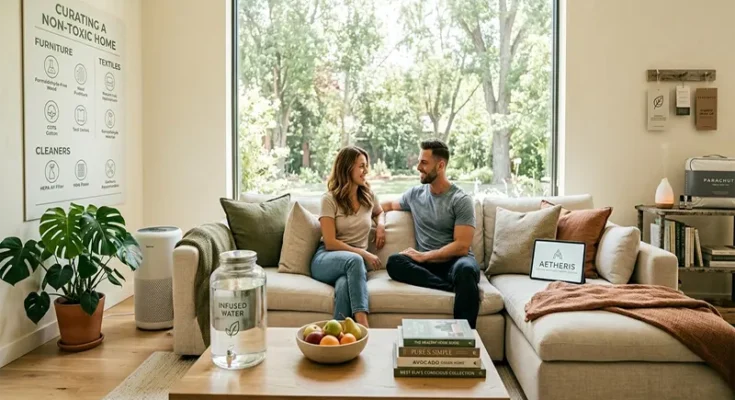
The concept of a “healthy home” has evolved. In 2026, interior design is no longer just about aesthetics or functionality—it is about the biological impact of our surroundings. While we often worry about outdoor smog, the air inside our homes can be up to five times more polluted than the air outside.

The primary culprit? Off-gassing. This is the process by which synthetic furniture materials, adhesives, and finishes slowly release Volatile Organic Compounds (VOCs), formaldehydes, and “forever chemicals” (PFAS) into your living space. Creating a non-toxic home is about choosing pieces that support respiratory health, endocrine balance, and long-term well-being.

The Non-Toxic Checklist: What to Look For

Navigating marketing claims like “natural” or “eco-friendly” can be difficult. To verify a brand’s health claims, look for these gold-standard third-party certifications:

  • GREENGUARD Gold: The strictest standard for low chemical emissions. Products with this seal are tested for over 15,000 VOCs.
  • GOTS (Global
Non-Toxic Home Furnishing Brands for a Healthy Indoor Environment READ MORE
The Biological Fortress: Whole-House Water Filtration and Air Purification for Healthy Living

The Biological Fortress: Whole-House Water Filtration and Air Purification for Healthy Living

In the architectural landscape of 2026, the home has evolved beyond a mere shelter; it is now the primary “immune system” for its inhabitants. As urban environments face increasing challenges from microplastics, volatile organic compounds (VOCs), and airborne pathogens, the integration of advanced filtration and purification systems is no longer a luxury—it is a mechanical necessity.

Modern residential design now prioritizes Human Sustainability, a concept that treats the air we breathe and the water we consume as foundational pillars of long-term health. By turning a home into a biological fortress, we create a sanctuary that actively neutralizes external threats while optimizing internal wellness.

Part I: The Water Ecosystem—Filtering the “Forever” Chemicals

In 2026, the conversation around water quality has shifted from simple taste and clarity to the removal of invisible, persistent threats: Nanoplastics and PFAS (Per- and Polyfluoroalkyl Substances). These “forever chemicals” have become ubiquitous in municipal supplies, …

The Biological Fortress: Whole-House Water Filtration and Air Purification for Healthy Living READ MORE
Circadian Rhythm Lighting Systems for Improving Sleep in Healthy Homes

Circadian Rhythm Lighting Systems for Improving Sleep in Healthy Homes

In the architectural landscape of 2026, the home is no longer just a shelter; it is a biological interface. As we spend approximately 90% of our lives indoors, the “biological darkness” of modern interior environments has become a primary driver of chronic sleep disorders and metabolic dysfunction. The solution emerging as a standard in healthy home design is Circadian Rhythm Lighting—a sophisticated technology that synchronizes artificial indoor light with the Earth’s natural solar cycle.

By implementing systems that mimic the shifting intensity and color temperature of the sun, homeowners can finally address the “social jetlag” caused by blue-light-emitting screens and static overhead bulbs. In 2026, circadian lighting has matured from a luxury hotel novelty into a critical component of human-centric residential infrastructure.

The Biology of Light: Melanopsin and the Internal Clock

To understand circadian lighting, one must understand the eye as more than just an organ for sight. Deep …

Circadian Rhythm Lighting Systems for Improving Sleep in Healthy Homes READ MORE
The Exponential Growth of Wellness Real Estate and the Rise of Healthy Home Certifications

The Exponential Growth of Wellness Real Estate and the Rise of Healthy Home Certifications

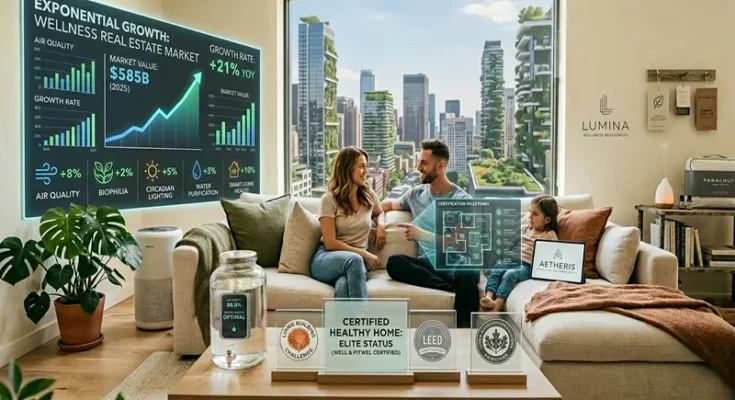
In 2026, the global real estate market has undergone a fundamental transformation. We have moved beyond the era of “luxury as an aesthetic” into the era of “luxury as a biological performance.” The global wellness real estate market is currently valued at approximately $721 billion, with a projected surge toward $1 trillion by the end of the decade.

This shift is driven by the “Wellbeing Address” concept: the emerging scientific and economic consensus that where you live is a more accurate predictor of your healthspan than your genetic code. For developers and investors, “Health” is no longer a soft amenity; it is a hard asset that drives higher rents, faster sales, and long-term portfolio resilience.

Market Growth Drivers: Why Wellness is Winning in 2026

The rapid acceleration of this sector is fueled by a convergence of institutional capital and a permanent shift in consumer psychology:

  • The Post-Pandemic Legacy: While
The Exponential Growth of Wellness Real Estate and the Rise of Healthy Home Certifications READ MORE
Housing Markets For Buyers and Sellers

Housing Markets For Buyers and Sellers

When it comes to finding the best real estate markets, it’s important to consider the supply and demand ratios. In a buyer’s market, prices are low and there’s an ample supply of homes for sale. Using online data aggregators such as Zillow, Redfin, and Roofstock can help you identify a buyer’s market. Buyer’s markets are typically centered around one or more large cities and the surrounding suburbs and exurbs.

Top 10 hottest real estate markets in the US

In the past few years, the US housing market has gone through ups and downs. The trend has continued into 2020, and many markets are expected to continue their growth in the upcoming year. Even in these markets, the selling prices have increased significantly but are expected to moderate over time.

Phoenix, Arizona is a prime real estate market for buyers of all ages. Its weather and lower cost of living have …

Housing Markets For Buyers and Sellers READ MORE