
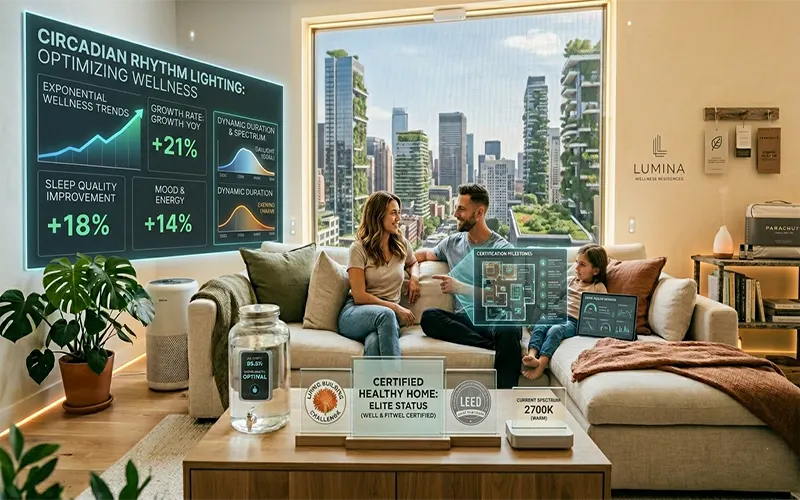
In the architectural landscape of 2026, the home is no longer just a shelter; it is a biological interface. As we spend approximately 90% of our lives indoors, the “biological darkness” of modern interior environments has become a primary driver of chronic sleep disorders and metabolic dysfunction. The solution emerging as a standard in healthy home design is Circadian Rhythm Lighting—a sophisticated technology that synchronizes artificial indoor light with the Earth’s natural solar cycle.
By implementing systems that mimic the shifting intensity and color temperature of the sun, homeowners can finally address the “social jetlag” caused by blue-light-emitting screens and static overhead bulbs. In 2026, circadian lighting has matured from a luxury hotel novelty into a critical component of human-centric residential infrastructure.
The Biology of Light: Melanopsin and the Internal Clock
To understand circadian lighting, one must understand the eye as more than just an organ for sight. Deep within the retina are intrinsically photosensitive Retinal Ganglion Cells (ipRGCs). These cells contain melanopsin, a light-sensitive protein that communicates directly with the Suprachiasmatic Nucleus (SCN)—the body’s master clock located in the hypothalamus.
When these cells detect specific wavelengths of light, they signal the brain to either flood the system with cortisol (the “alertness” hormone) or trigger the release of melatonin (the “sleep” hormone).
- Morning (Active Blue): High-intensity, blue-enriched light (5000K–6500K) is required to suppress melatonin and “reset” the clock each morning.
- Evening (Warm Amber): As the sun sets, the system must transition to low-intensity, amber-toned light (<2700K) that is depleted of blue wavelengths. This signals the “pineal gate” to open, allowing melatonin to rise naturally.
- Night (Zero-Blue): Any light exposure during sleep hours should be in the red or deep-amber spectrum to avoid “waking” the SCN during a bathroom trip or late-night kitchen visit.
2026 Standards: Measuring Light with m-EDI
The industry has moved beyond “Lumens” and “Lux” as the primary metrics for wellness. In 2026, the gold standard is Melanopic Equivalent Daylight Illuminance (m-EDI). This metric measures the “melanopic” impact of light—how much it actually stimulates the internal clock rather than how bright it looks to the human eye.
Under the WELL v3 Building Standard (Feature L03), healthy homes are now designed to provide high m-EDI (typically 150+ lux) at the eye level during the day and less than 10 m-EDI in the hours before sleep. This ensures that the light is physically “telling” your body what time it is, regardless of the weather outside.
Hardware & Implementation: Three Levels of Circadian Design
Homeowners in 2026 typically choose between three tiers of integration based on their budget and architectural goals.
1. Tunable White Smart Bulbs (The Entry-Level)
Systems like Philips Hue, LIFX, or the newer Oasis Adaptive series allow users to swap standard bulbs for smart versions. These are controlled via apps that track the local sunset and sunrise. While effective, they often lack the “vertical illuminance” required to fully stimulate melanopsin cells unless positioned strategically.
2. Automated Architectural Solutions (The Mid-to-High Level)
Systems like Lutron Ketra or Dyson SolarCycle are integrated into the home’s electrical DNA. These use “Near-Infrared” (NIR) and full-spectrum LED arrays to create light that is indistinguishable from natural sunlight. They feature Predictive Lighting AI, which adjusts the home’s light profile based on the user’s personal sleep data from their Oura or Whoop wearables.
3. Biophilic Virtual Skylights (The Premium Experience)
For rooms without windows, virtual skylights like Innerscene use ray-tracing technology to simulate a 3D sky. They show a sun that moves across the ceiling throughout the day, providing the psychological and biological benefits of a real window in basements or high-density urban apartments.
Daily Circadian Lighting Schedule
A well-calibrated healthy home follows a strict “Light Recipe” throughout the day to ensure optimal hormonal transitions.
| Time Block | Color Temp (Kelvin) | Intensity | Biological Goal |
| 07:00 – 09:00 | 6500K (Sky Blue) | 100% | Suppress Melatonin; Reset SCN |
| 09:00 – 13:00 | 5000K (Cool White) | 80% | Sustained Cortisol; High Alertness |
| 13:00 – 17:00 | 4000K (Natural) | 60% | Maintain Focus; Prevent Slump |
| 17:00 – 21:00 | 2700K (Warm Glow) | 30% | Start Melatonin Onset; Wind Down |
| 21:00 – 07:00 | 1800K (Amber/Red) | <10% | Protect Sleep Cycle; Zero Blue |
Beyond the Bulb: Complementary Strategies
A circadian lighting system is only as good as the darkness it can provide. In 2026, “Healthy Home” bundles include:
- Automated Blackout Shading: Shaders that drop precisely at sunset or a set bedtime to eliminate light pollution from streetlights.
- Flicker-Free Technology: Modern drivers must ensure a Stroboscopic Visibility Measure (SVM) ≤ 1.0. High-flicker lights, even if they are the right color, can irritate the nervous system and lead to headaches or restless sleep.
- Circadian Materiality: Using “Matte” finishes and earthy pigments on walls to ensure that warm evening light isn’t reflected harshly, maintaining the calming “Sunset” effect.
Technical Spec Checklist for Buyers
Before investing in a system, ensure it meets the 2026 “Healthy Home” criteria:
- [ ] Full Spectrum Dimming: Does the light maintain its color accuracy even when dimmed to 1%?
- [ ] CRI 95+: A high Color Rendering Index ensures the light looks natural and comfortable.
- [ ] m-EDI Tracking: Does the software provide a report on the “Melanopic” impact of the light?
- [ ] NIR Inclusion: Does the system include Near-Infrared wavelengths (which aid in cellular repair)?
- [ ] Flicker-Free: Verify the SVM rating is below 1.0.
The ROI of Sleep
The return on investment for circadian lighting isn’t just found in property value—it is found in human performance. Proper sleep hygiene facilitated by light has been linked to lower risks of cardiovascular disease, improved immune response, and higher cognitive clarity.
As we look toward 2030, the “Biological Home” will become the default. Technology is finally being used to solve the problems that technology created, allowing us to live in modern convenience while honoring the ancient, solar-driven rhythms of our DNA. By bringing the sun indoors, we aren’t just lighting a room; we are fueling the person within it.